

March will be remembered as a month shaken by international conflicts and strong volatility across both capital markets and commodity markets.
The month began with a military attack by Israel and the United States against Iran, whose main objective was regime change and the elimination of its military capabilities. This was followed by a blockade of the Strait of Hormuz by Iran, which is of critical importance for energy markets, as around 20 million barrels of oil pass through it daily (around 20% of global maritime oil trade).
As a result, the price of crude oil exceeded $100 per barrel for the first time in four years. In an attempt to ease the shock, the International Energy Agency released 400 million barrels from its reserves, but this proved to be only a short-term solution. In the liquefied natural gas market, the situation was even more strained due to more limited reserves.
Another event that impacted markets was the U.S. labor market report, which showed that the economy lost 92,000 jobs in February. Although healthcare worker strikes were certainly a factor, this is already being interpreted as a real cooling of the labor market.
Toward the end of the month, the United States proposed a 15-point plan to end hostilities. This triggered a short-lived positive market reaction and gave markets some relief, after Iran refused to sign the agreement. Subsequently, there were several similar episodes where one side publicly rejected the terms of peace proposed by the other.
After a month full of events, the main benchmark S&P 500 fell by 5%, which historically represents a relatively moderate decline compared to similar shocks.
After currency adjustment into euros, the decline was 3.77%, as the dollar appreciated during the month. For the technology index NASDAQ, the decline was 2.60%.
Turning to the bond market, the Federal Reserve decided to keep interest rates unchanged for a second consecutive month. Members of the committee commented that the economy is growing at a solid pace and inflation remains slightly above the target level.
The Fed maintained its forecast for one interest rate cut this year and noted that, if inflation accelerates further due to rising oil prices, an interest rate hike is also possible. This became a catalyst for rising yields on government bonds, both at the short and long end of the curve.
This also affected the dollar, which strengthened against the euro. The rise in Treasury yields also had a negative impact on gold prices, which declined.
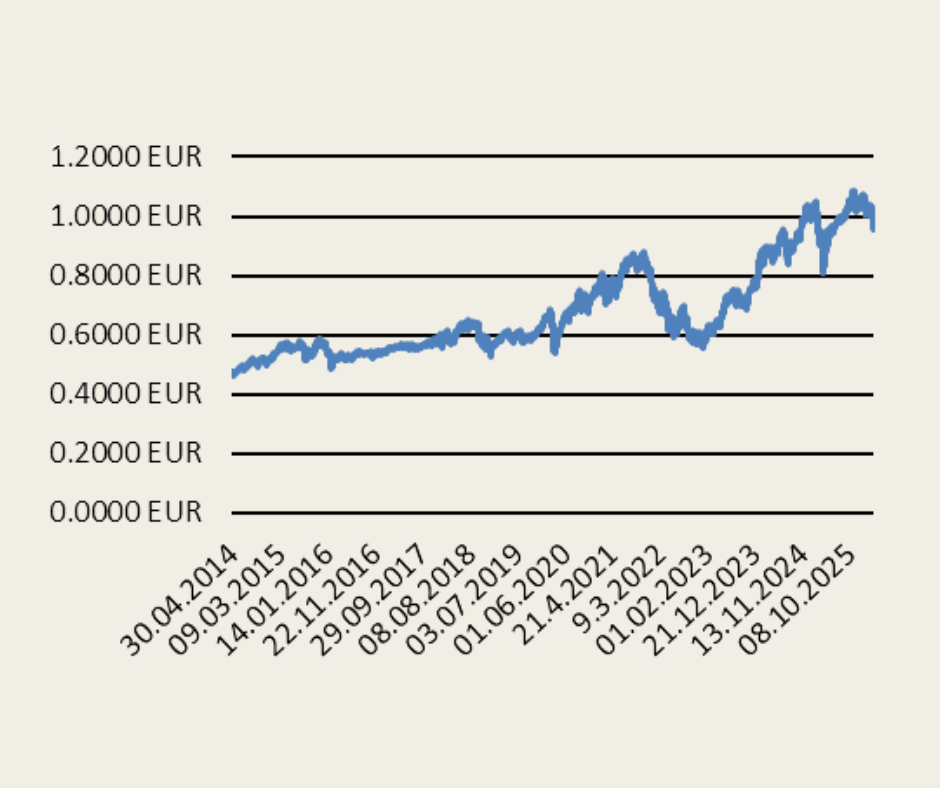
PERFORMANCE OF “Compass Global Trends” Fun
The fund ended the month with a net asset value per unit of EUR 0.9839, representing a monthly decline of 3.77% and a decline of 6.37% since the beginning of the year.
Unit price performance from 1 April 2014 to 31 March 2026.
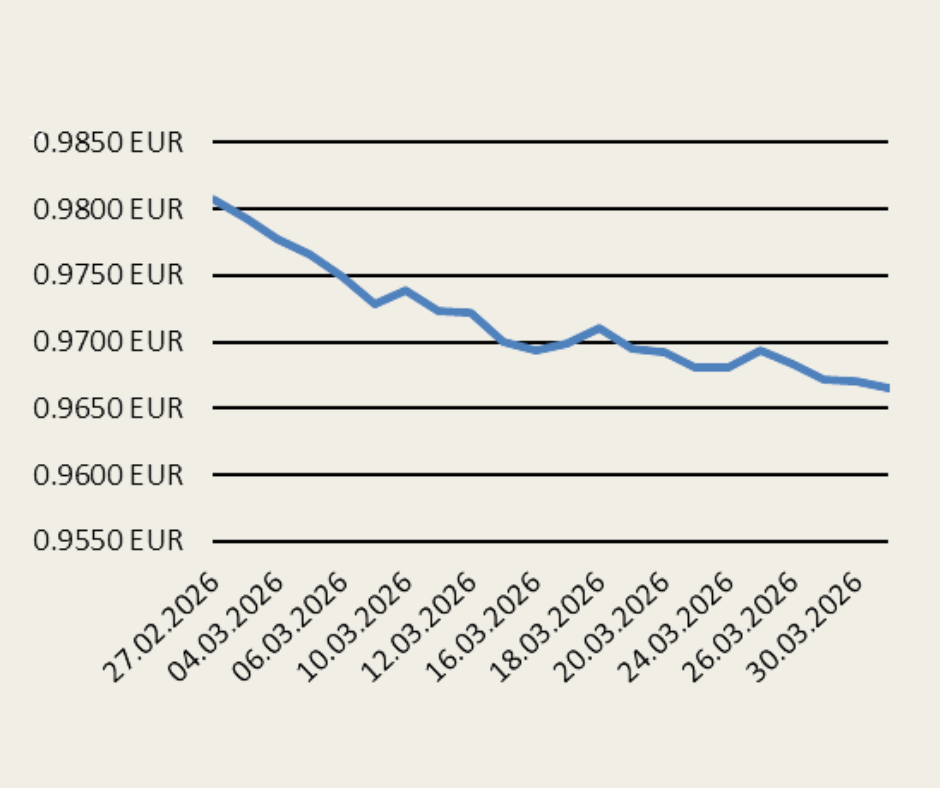
PERFORMANCE OF “Active Euro Deposit” Fund
Unit price in EUR for March.
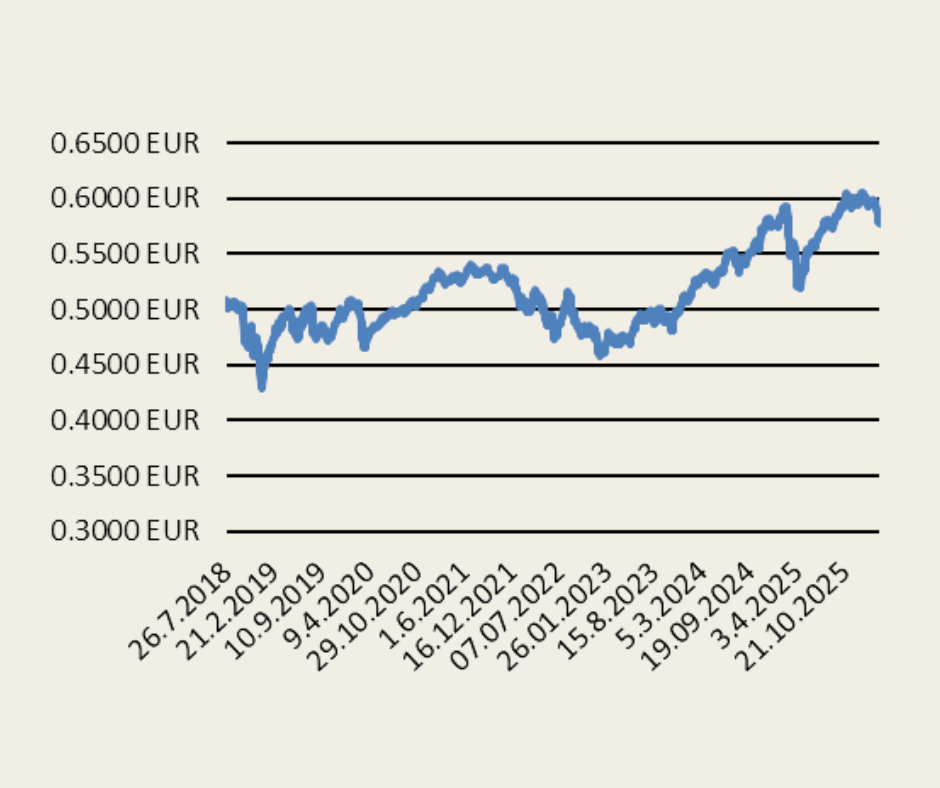
PERFORMANCE OF “Compass Fund Select-21
Unit price performance from 26 July 2018 to 31 March 2026.
Important information:
This information is a marketing communication and does not constitute investment advice, a recommendation, investment research, or an investment consultation. The information is valid as of the date of issuance of the marketing material and may change in the future. The value of units in collective investment schemes fluctuates over time and may be higher or lower than the value at the time of investment. Profits are not guaranteed, and there is a risk that investors may not recover the full amount invested. Investments are not guaranteed by any state-established guarantee fund or any other form of guarantee. Information on the past performance of financial instruments is not a reliable indicator of future results. Therefore, investors are advised to read the Prospectus and the Key Information Document before making a final investment decision. These documents are available in Bulgarian on the website of “Compass Invest AD – www.compass-invest.eu”, and upon request you may receive a free paper copy at the management company’s office at: 36 Alabin Street, floor 4, Sofia, Bulgaria, every working day from 9:00 to 17:00. Future returns are subject to taxation depending on the individual situation of each investor and may change in the future. A summary of investors’ rights is available at the following hyperlink, in Bulgarian: “here”. The mutual funds managed by Compass Invest AD are actively managed and do not follow an index. We inform you that the Management Company Compass Invest AD may decide to terminate the offering of the funds in the territory of the Republic of Bulgaria.
Information on expenses:
*This is the maximum amount that may be deducted from your funds before their investment, respectively before investment income is paid out. The stated fees are included in the announced purchase or redemption prices of the fund units. Investors can obtain up-to-date fee information from their financial advisor.
** The fees are used to cover the costs of managing the fund, including marketing and distribution costs for the units. These expenses reduce the potential growth of the investment, as they may affect returns. Current expenses include the remuneration of the management company, the depositary bank, fees of Central Depository AD, the Financial Supervision Commission (FSC), etc.
Risks: In addition to benefits, investing in mutual fund units also involves certain risks, such as:
Market risk, with the following components:
a) Interest rate risk – the risk of a decrease in investment value due to changes in interest rates;
b) Currency risk – the risk of a decrease in investment value for assets denominated in a currency different from the lev and the euro;
c) Price risk – the risk of a decrease in investment value due to adverse changes in market prices;
Credit risk – the risk of a decrease in the value of a position due to unexpected credit-related events involving issuers of financial instruments, counterparties in exchange-traded and over-the-counter transactions, as well as the countries in which they operate;
Operational risk – the risk arising from errors or imperfections in the organization’s systems;
Liquidity risk – the risk arising when assets must be sold under unfavorable market conditions;
Concentration risk – the risk arising from improper diversification of exposure to groups of related clients, a single economic sector, geographic region, etc.;
Position risk – the risk related to changes in the price of a given instrument due to factors associated with the issuer, or in the case of a derivative instrument – factors related to the issuer of the underlying asset.
Additional information about the risks is contained in the Prospectus of the respective fund, available at: www.compass-invest.eu